On July 21, 2023, two films opened on the same day: Christopher Nolan’s Oppenheimer and Greta Gerwig’s Barbie. The internet, inevitably, turned it into a meme — “Barbenheimer” — and a genuine cultural moment, with people scheduling double features to watch a somber atomic-bomb drama and a pink comedy back to back in one sitting.
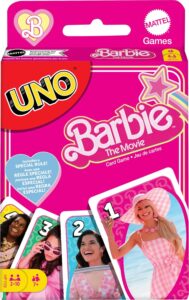
I have a small, strange footnote in that same weekend: I was Lead Product Designer for the team that shipped UNO: Barbie the Movie, our UNO title tied to the film. So I was living on the pink side of Barbenheimer. But it’s the other half of that meme I keep coming back to, because Oppenheimer is one of the best case studies I know in leading brilliant people without holding any formal authority over them.
J. Robert Oppenheimer was scientific director of the Los Alamos Laboratory — but he didn’t hold military rank, and the Manhattan Project’s actual chain of command ran through General Leslie Groves. Many of the physicists at Los Alamos were more senior than Oppenheimer, more decorated, some already Nobel laureates — people with every conventional reason not to defer to him. What made the lab function wasn’t rank. It was that Oppenheimer could take an entire room of brilliant, strong-willed specialists working on wildly different pieces of the problem and synthesize their thinking into one technical direction the whole room actually trusted.
I think about that dynamic constantly, because it describes my actual job better than most org charts do. As a product designer, I don’t have direct reports. What I have is responsibility for a vision — communicated clearly enough that a graphic designer working on physical components, a UX designer working on a companion app, and an engineer working on the underlying tech all understand not just what they’re building, but why it needs to feel a certain way when it’s done. Nobody on that team reports to me in an official manner. The only authority I have is the quality of the idea and how well I can get it across.
Lesson: When you can’t lead by authority, you lead by clarity. Being the person who can see the whole shape of the problem is worth more to the team and product. It’s nice to have both, but that’s not always the circumstance.
And somewhere in an alternate universe, there’s a version of this post where I get to say I worked on Oppenheimer merchandise instead, and the rest writes itself a little more cleanly. For now I’ll stick with Barbie.
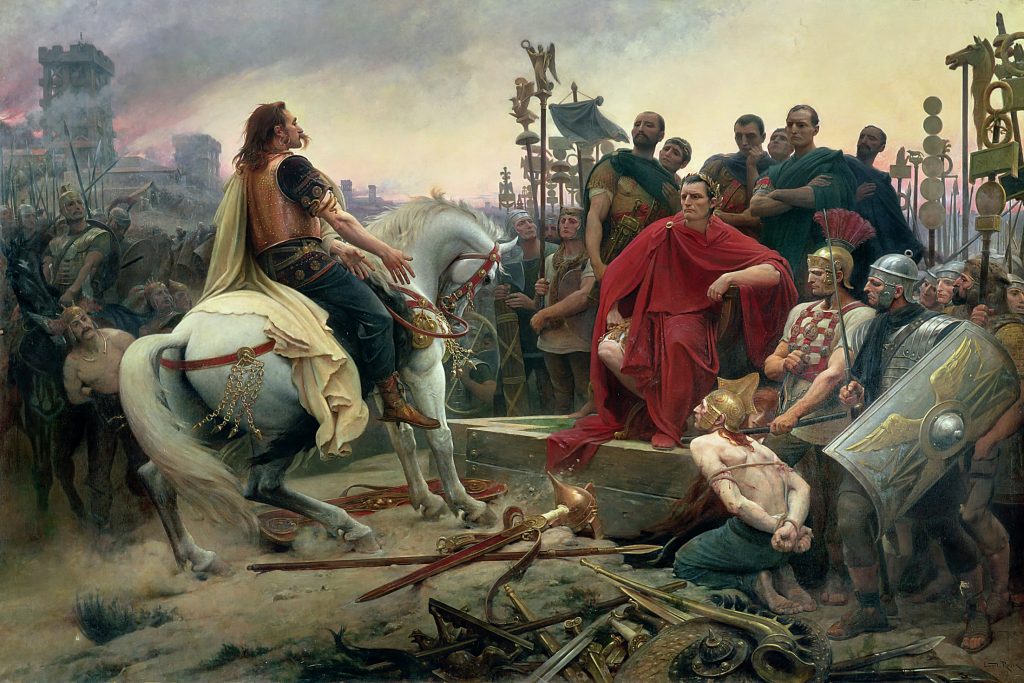
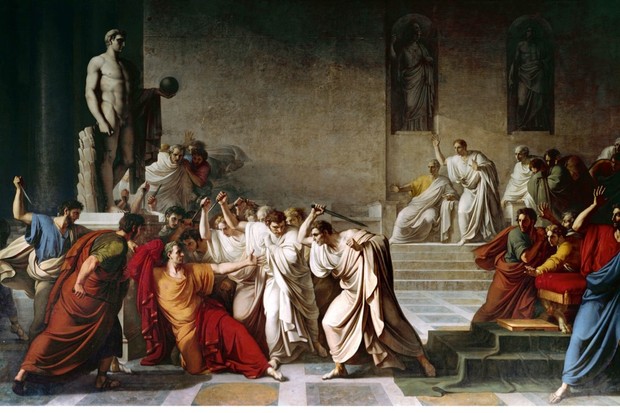
When Julius Caesar set out in Gaul, he had clear objectives. Pompey and Crassus, Caesar’s political frenemies, were both richer and more famous than him. (Crassus even had to pay off Caesar’s creditors at one point in order for him to be able to leave Rome!) He needed cash and a reputation back home if he wanted to keep his place at the top.
Just over Rome’s border was Gaul, modern day France. It was divided into warrior nation-tribes and had lots of resources. Caesar, playing up fears of the “barbarians” from the north, intended to play divide-and-conquer in Gaul and simultaneously get rich on the plunder and get popular back in Rome.
Know your strengths
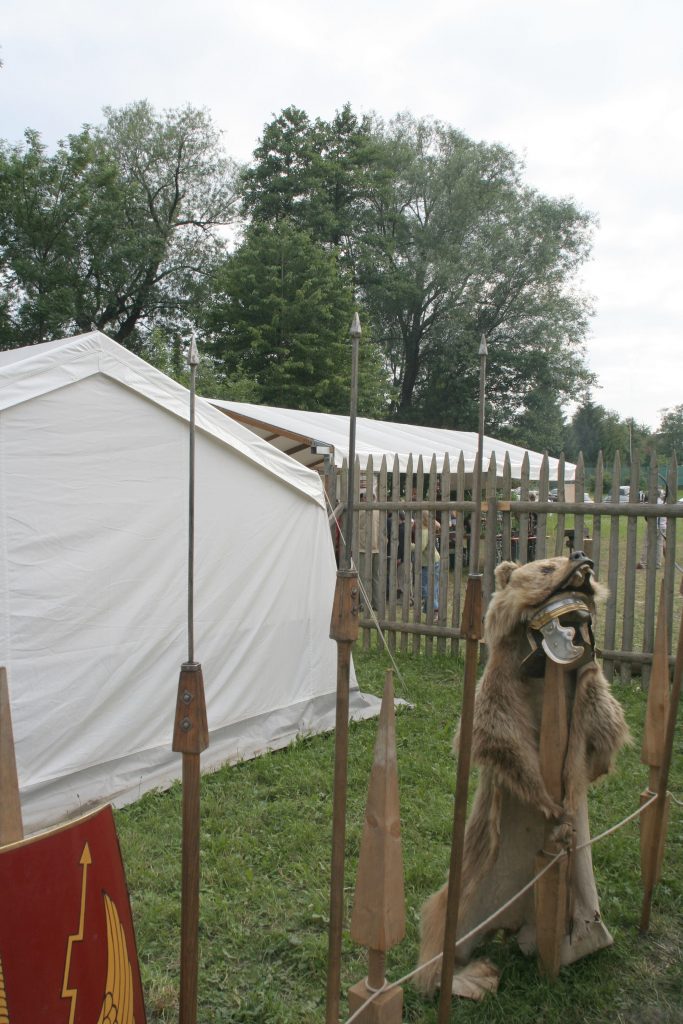
(Ewok legionnaire not included)
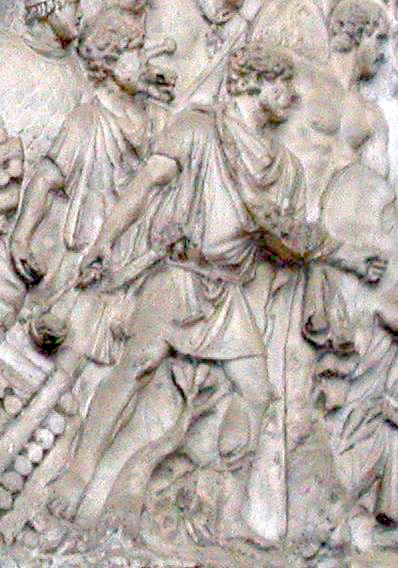
Caesar’s core team was his legions: well-trained fighting units of approximately 4000 men each. The soldiers—legionnaires—fought on foot, equipped with heavy armor, large shield, a short stabbing sword, and a heavy javelin (the pilum).
TLDR: these were the best troops in the world in a stand-up fight.
Caesar knew where his strength and core competencies were, and built his army around them. But he knew that wouldn’t be enough to achieve his goals.
Recognize your weaknesses
While Rome excelled in training heavy infantry units, there were some serious deficits. The Roman legions lacked specialists like archers and skirmishers—troops who would move ahead of the battle line to harass and confuse the enemy. In the forests and hills of Gaul, this would be a big drawback.
Even more seriously, Roman legions had very little cavalry. These troops on horseback could be used as scouts to spy out the land, guard the army from ambush, and raid the enemy. They were also the best counter to an enemy who was also on horseback.
And there were LOTS of Gauls on horseback.
Hire the experts
Training up the specialists he needed would take more time and money than Caesar had. It would also require a major change in how the legions were recruited, trained, and equipped.
Instead, Caesar looked to expert freelancers to provide that support. Using a good network of professional contacts around the Mediterranean, he hired people with great reputations in their respective fields. Slingers from the Balearic Islands, archers from Crete, and horsemen from Numidia were recruited into his army.
Caesar paid out-of-pocket from their initial fees and offered a portion of the project’s profits (i.e. plunder!) as a completion bonus. This was far less expensive and time-consuming than training up those capabilities “in-house” and enabled him to move ahead with his campaign much faster.
Poach from your competitors
Even with the backup horsemen from Numidia, Caesar was still weaker in cavalry than his opponents. His solution was to hire people who knew the area as well as anyone: other Gauls and Germans.
Taking advantage of political divisions in Gaul, Caesar dipped into his remaining cash reserves to recruit cavalry from among the rival tribes. That was essentially a zero-sum win for him: every horseman riding for Caesar was one less riding for his enemies.
Caesar then had all the specialists he needed to support his core team in pursuing his goals.
Play to your strengths
Caesar was the epitome of “move fast and break things,” frequently moving his army farther and faster than his opponents expected. This wasn’t reckless or spontaneous action, however.
Caesar carefully planned his moves, ensuring that his team had the necessary equipment and resources weeks in the future. In an age before “just in time” delivery (or even reliable roads), this was a competitive advantage his opponents sorely lacked—and Caesar exploited.
Profit
Caesar conquered all of Gaul (and even invaded Britain!), gaining both the wealth he wanted and, through his cleverly-written reports back to Rome, the reputation he desired.
You may not be planning to conquer Gaul, but Caesar provides a good model for staffing up a team for a big project.
In Orson Scott Card’s science fiction novel Ender’s Game, the eponymous Ender Wiggin unknowingly fights a real war by playing a simulation. His orders in the “game” are transmitted to actual combatants who carry them out in a battle to the death against an alien enemy. Presented with a game using real-time data from the battlefield, Ender is free to play his best strategies and win.
I first became aware of Ender’s Game when I was part of a DARPA study group. We explored how massively-multiplayer online game populations could interact with and influence political and military decision making – crowdsourcing Ender’s Game, so to speak.
Modern militaries around the globe have used games to teach decision making, practice command skills, and test hypothetical scenarios since the early 19th century. My own experience creating game-based learning simulations for the Department of Defense is a continuation of that practice.
But there’s no need to restrict these tools to the military theory. Strategy games help players understand the context and potential outcomes of their decisions, particularly in complex, dangerous, or expensive matters.
Mistakes in business can be extraordinarily costly, with vast amounts of money and lives (or at least livelihood) on the line.
Is it possible to create a real Ender’s Game for a board of directors?
Real-time data collection is giving business operators access to more and richer information than ever before. The very volume of data creates its own complexities in deciphering it. Data must be analyzed, synthesized, and summarized in order to be actionable by decision makers.
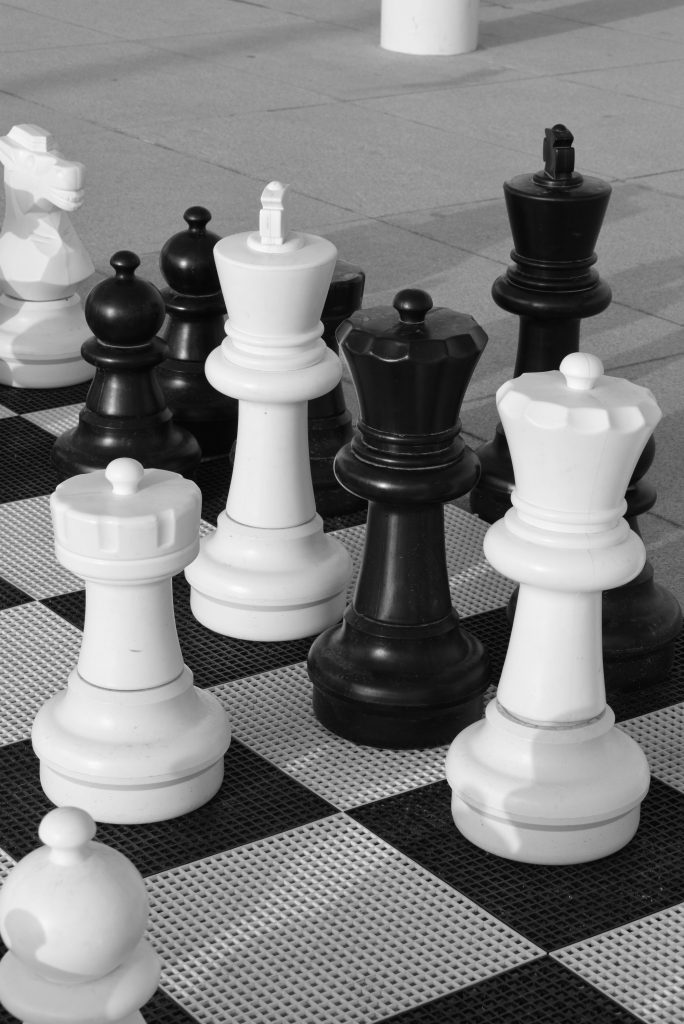
Strategy games simplify information in order to present meaningful and understandable choices for players. This distillation of complex concepts into a framework of rules makes games useful for teaching difficult concepts. Chess, for example, is highly abstract, but still captures the essence of maneuvering a pre-gunpowder army on an open plain with pre-radio command and control limitations.
Business is a popular theme for games, going back to the beginning of the 20th century. Pioneering edtech game designer Lizzie Magie created Monopoly as a teaching tool for economic theory, but over 100 years later it’s still a common household family game. (Not a good one, in my opinion, but that’s a different matter.)
These business games vary by theme and complexity. Where Acquire is a relatively simple investment strategy game, others are highly complex decision making exercises.
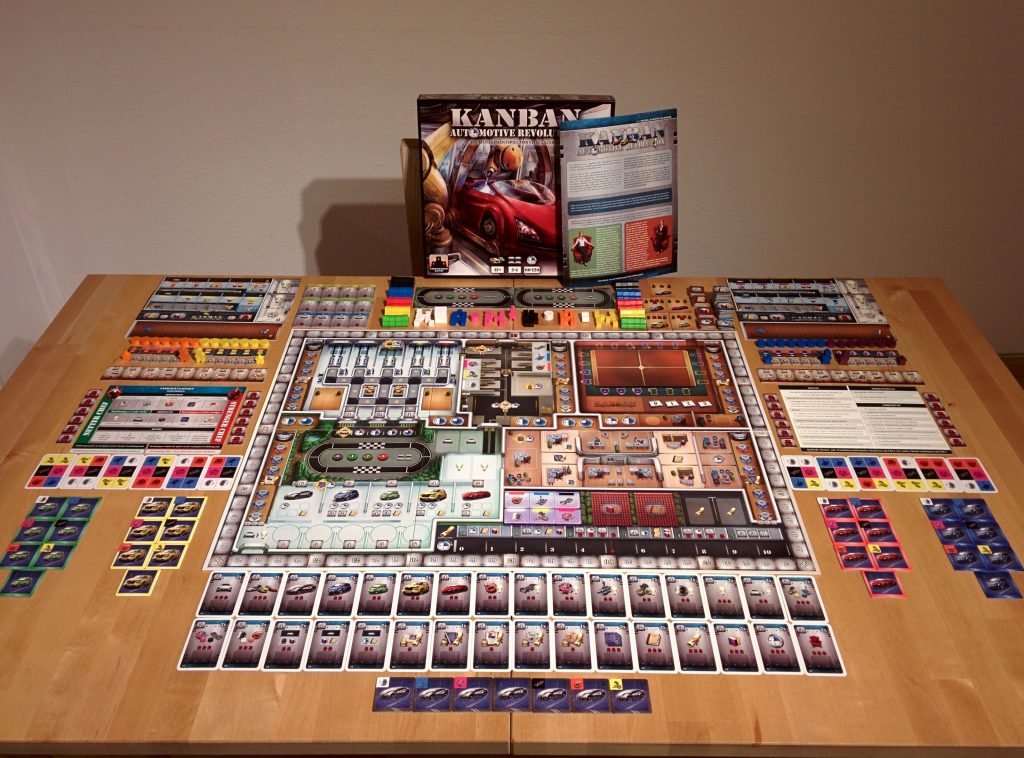
Food Chain Magnate is a resource management game where players attempt to build the most financially successful fast food restaurant chain. In Kanban, named for Taiichi Ohno’s Toyota Production System, players manage workflows in a just-in-time automotive manufacturing environment.Be warned: neither of these board games is for the faint of heart!
Be warned: neither of these board games is for the faint of heart!
Photo by Stanley Dimant
Video games have a long tradition of simulating business operations as well.
Rollercoaster Tycoon is a classic of business and construction gaming. Players take on the role of theme park operators and manage the layout, construction, and operation of their park. Players build rides, food stands, bathrooms, and more as they try to attract and cater to the needs of guests. Keeping the guests happy and the park financially solvent are clear measures of success.
Like board games, business simulation video games run the gamut of themes. As their names suggest, in Two Point Hospital and Farming Simulator players manage a hospital or farm respectively.
Looker inter
But the business world is continually changing.
While board games and video games can be used to teach or simulate certain aspects of managing a business, they all share the same limitation – they’re designed and built around static data models. Assumptions about costs, values, and markets built into the game model don’t change after the game hits the shelf.
From a game design perspective, of course, it’s much easier to create a simulation based on a static (potentially heavily abstracted) data model. Similarly, from a production standpoint, creating a dynamic data model that can be updated is much more expensive to produce and test.
There’s also not a significant demand from players for such a feature, so there’s no incentive to spend the financial and personnel resources developing it.
These games still have educational as well as entertainment value, but static data sets restrict them to instructional use. And even if those data sets can be updated periodically, through patches or content expansions, the “freshness date” of that information is of questionable real-world value.
Is that real-time data available?
Short answer: yes. The data is there – a veritable fire hose of information. Understanding that data is another matter.
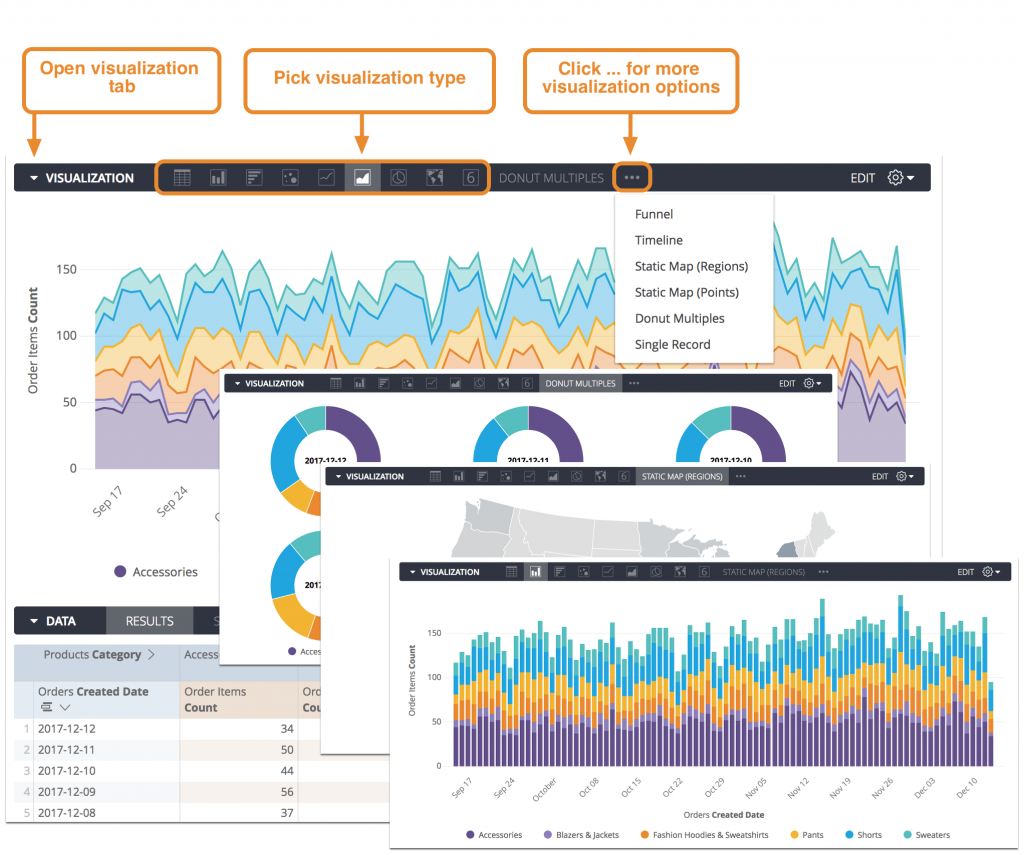
Companies like Looker and Domo provide real-time data visualization for businesses in pretty traditional packaging.
Other companies are using emerging technologies to enhance data visualization. Talespin and Virtualitics are developing immersive VR data visualization tools that enable 3D spatial display of information.
That’s a good step, but what if we take that further?
What if we could update our game model with real-time data?
Games are essentially products of very specific user experience design. Games are designed for accessibility and playability – the ease at which a player, given sufficient familiarity with the game, can make informed decisions.
Strategy games are designed to enable players to make decisions and see the outcomes of those choices subject to situational variables (“input randomness”) and uncertain results (“output randomness”).
Bringing real-time data into the game model increases the value and validity of the game for actual decision making exponentially.
Outcomes of player decisions more accurately reflect the “ground truth” of what’s happening because it’s based on data from now, not six months or even six days ago.
And those outcomes based on real-time data can be simulated much faster than real-time. Different choices can be gamed and the results calculated before an actual real-world decision need be made.
As results play out in the real world, they can be compared to the expected game results. Differences in the outcomes (game vs. real world) become refinement points for the game model. The more it’s used, the more predictive the model becomes.
Business games should evolve from the abstract educational tools they currently are to a primary real-world interface for decision making. The tools are all here. We just need to put them together properly.
Is your business competitor already gaming all the possible outcomes?
Connect with me on Twitter
Stay in touch with my newsletter. No more than once a week, no spam.
If you like what you read, please share it with others via the links below!